Markets · Shenzhen
Shenzhen Electronics Markets: Bargaining and Layout Tips
Learn how to navigate Shenzhen's electronics markets, find the right products, and bargain effectively. Get detailed maps, terms, and practical tips.
· 5 min read
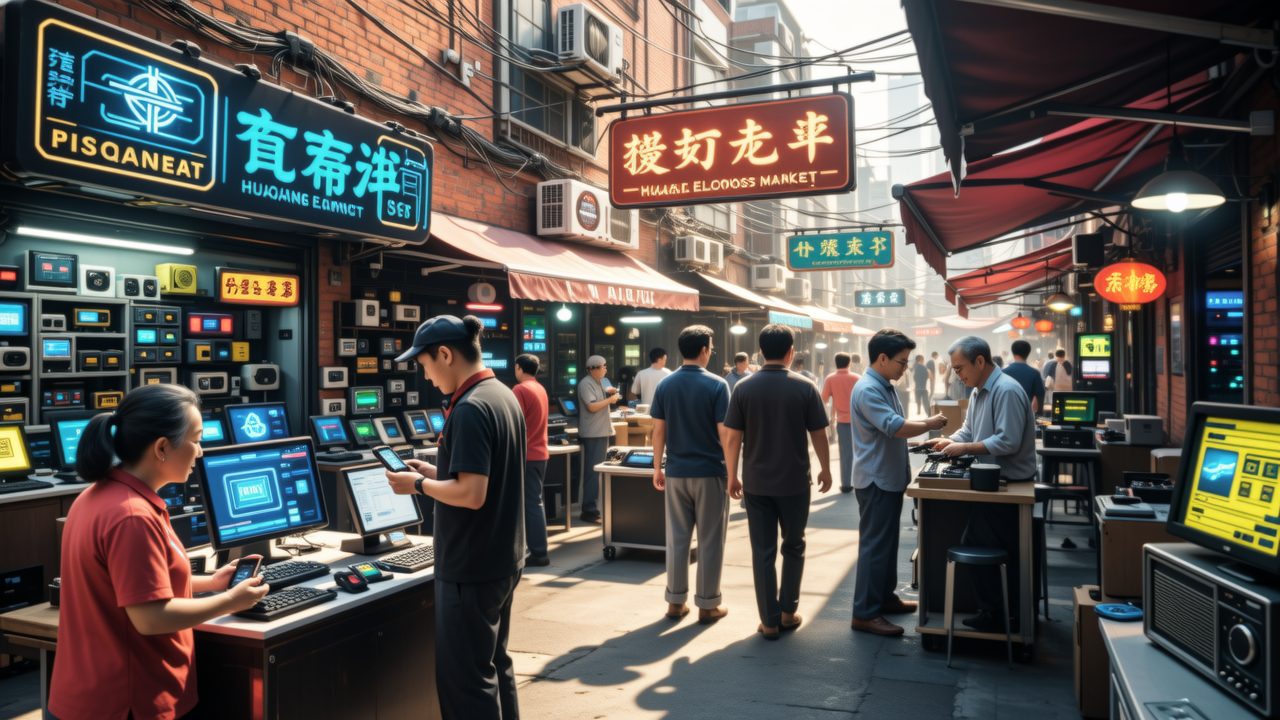
Overview of Shenzhen's Electronics Markets
Shenzhen's electronics markets, particularly in Huaqiangbei, are vast and can be overwhelming for first-time visitors. This guide will help you navigate these markets, understand their layout, and master the art of bargaining.
Getting to Huaqiangbei
Huaqiangbei is easily accessible by metro. Use AMap (https://apps.apple.com/us/app/amap-global/id461703208) to find your way. Search 华强北电子市场 to get the exact location. The nearest metro station is 华强路站 (Huaqiang Road Station, Line 1), not to be confused with 华强北站 (Huaqiang North Station, Lines 2 and 7).
Download AMap from the official App Store page. It has an English interface and does not require a Chinese phone number.
Understanding the Market Layout
The Huaqiangbei market is divided into several buildings, each specializing in different types of electronics. Here’s a brief overview:
- 赛格大厦 (SEG Plaza): Components, tools, and small electronics.
- 华强广场 (Huaqiang Plaza): Mobile phones, accessories, and consumer electronics.
- 曼哈数码广场 (Manhar Digital Square): High-end gadgets and professional equipment.
For a more detailed map and building-specific information, refer to bunnie Huang’s Essential Guide to Electronics in Shenzhen. Note that some information may be outdated, so cross-reference with Now Shenzhen’s review of the updated guide.
Common Terms and Phrases
Knowing some basic terms and phrases will help you communicate more effectively. Here are a few key terms:
- 价格 (jiàgé): Price
- 便宜 (piányi): Cheap
- 打折 (dǎzhé): Discount
- 最低价 (zuì dī jià): Lowest price
- 批发 (pīfā): Wholesale
Use Google Translate or Apple Translate on your device for more complex conversations. Note that Google Translate is no longer available in China, as reported in CNBC's report on the shutdown.
Bargaining Techniques
Bargaining is a common practice in these markets. Here are some effective techniques:
- Start by asking for the price and then offer a lower amount. A good starting point is about 30-50% below the initial quote.
- If the seller refuses, ask if they can give a discount. Use the phrase “能不能便宜点 (néng bù néng pián yi diǎn)” which means “Can you make it cheaper?”
- Be prepared to walk away. Often, the seller will call you back with a better offer.
- Buy in bulk. Larger quantities often come with better discounts. Use the term “批发 (pīfā)” for wholesale prices.
For a deeper understanding of what you can buy and how to assemble electronics, read Scotty Allen’s experience in Huaqiangbei.
Payment Methods
Most vendors accept cash, but using digital payment methods like Alipay and WeChat Pay is more convenient. Here’s how to set them up:
- Download Alipay from the official website. In the app, go to Me > Bank Cards, add a Visa, Mastercard, Amex, or JCB card, and upload your passport for verification. Verification usually takes minutes but can take up to 72 hours.
- Download WeChat from the official website. Follow China Survival Kit's step-by-step WeChat registration walkthrough to register and set up payments. If you encounter issues, refer to this guide on common failures and solutions.
Note that payments under ¥200 typically carry no fee, while larger amounts may incur a 3% fee.
Staying Connected
Having a local SIM card or eSIM will help you stay connected. You can get one at major airports or telecom stores. For a detailed guide, see Trip.com’s tutorial on getting a SIM card in China. A 30-day package typically costs between ¥50-150 and requires your passport for registration.
Important Reminders
Always check the quality of the items before purchasing. Ask the seller to power on the exact unit you are buying, not just the display sample. Photograph the model number on the box before you pay. If they say your unit is in a warehouse nearby, wait for it and test that one.
Be aware of counterfeit products. Buy from reputable sellers and check for genuine packaging and serial numbers.
When traveling with electronics, ensure your power banks comply with regulations. According to the Civil Aviation Administration of China (CAAC), only power banks with clear 3C certification and not on recall lists are allowed on domestic flights. For international travel, follow FAA guidelines for lithium batteries.
What it looks like
Frequently asked
How do I get to Huaqiangbei from the airport?
Take the metro from Shenzhen Bao'an International Airport to Huaqiang Road Station (Line 1). Use AMap to find the exact route.
What are the best times to visit the electronics markets?
The markets are open from 9 AM to 8 PM, but the best time to visit is in the morning when there are fewer crowds and vendors are more willing to negotiate.
Can I use my foreign credit card in the markets?
Yes, but it's more convenient to use Alipay or WeChat Pay. Set up these apps before your trip and link your foreign credit card.
How do I avoid counterfeit products?
Buy from reputable sellers, check for genuine packaging and serial numbers, and ask to test the exact unit you are buying.
What should I do if I have issues with my purchase after leaving the market?
Photograph the product, receipt, and seller's contact information. Contact the seller directly for a resolution. If necessary, escalate to the market management office.
On the ground in China
Want this handled by a person, not a browser tab?
A personal host meets you at arrivals, sets up payments and transport, and walks you through markets, factories or hospitals — transparent per-day pricing, itemized in writing before any payment.
About this guide
Written and maintained by the China Unboxed team from Shenzhen. We keep guides current and general on purpose — always verify prices and policies against official sources before booking.
Consultation is completely free. Leave your email and tell us what you need; we will reply within 24 hours.